Contact
Skip to main content


When it looks like everyone else is already using AI, standing still starts to feel like falling behind. So the pressure to do something is immense - but knowing where to start is the hard part.
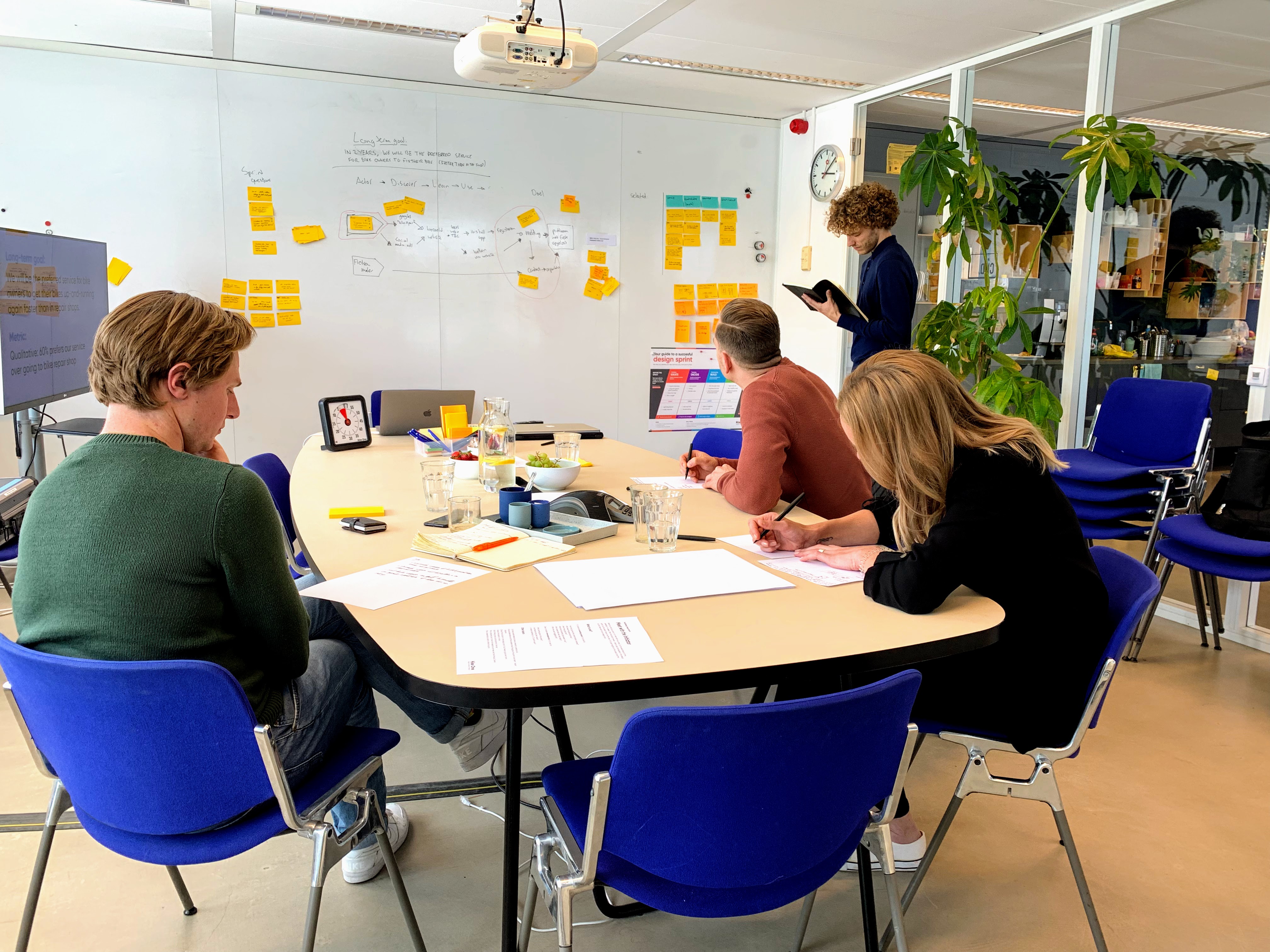
With our AI Design Sprint®, developed by 33A, we bring the structure and the tools for that conversation — helping you find where AI would add the most value in your organisation, and turn those opportunities into a concrete plan and a working prototype.

Day 1
We lay out how work runs across your organisation or business area, and go looking for the places where AI would make the biggest difference. The team prioritises on business value — not on what's technically easiest.
Day 2
We take one of those processes, mapped exactly as it runs today, and work through it step by step: which steps AI could take over, which stay with people, and what data each one would need.
Days 3–4
We put the plan in front of AI engineers (your own or external) to find out whether it holds up — against your data, your systems and the models involved.
Days 5–11
We facilitate the creation of a working version built with real data, so you can test the data quality and the model itself. It isn't plugged into your IT environment yet, and user experience and security come later.

We don't sell licences and we have no model to promote, so our only interest is whether the solution works for the people who'd have to use it. That's also why we facilitate rather than advise — the decision has to belong to your team, or it won't survive contact with the people doing the work.
We've been designing digital products for over eighteen years, and the question that decides whether an AI feature succeeds is the same one that has always decided it: does this fit the work, and will anyone use it.

No, and that's rather the point. The two days are built so that people who know their own process can find the value of AI themselves. For the tech check and prototyping you do need AI engineers, yours or a partner's — and we help you arrange that.
Not directly. We start from your processes, not from a list of AI tools or a predefined set of use cases. Which tools are involved comes up along the way, but it isn't the starting point.
A workshop ends with ideas on a wall. These two days end with an agreed priority and a concrete plan for a specific process, made with the people who'd have to live with it.
Yes — and we'd still start with day one. Teams often arrive certain about a process and leave having found a better candidate, or the same one with agreement from everyone who has to be involved in it. Day one is also where the goal and the ambition level get set, which is what keeps the concept from drifting later on.
Two workshop days, and roughly nine more for the technical check and prototyping. Your leadership group attends day one and your product team attends day two — a full day each, and that's the whole ask for most people. The rest is run by a small team of AI engineers.
The sprint works when the people who decide and the people who do the work are in the same room. That usually means one of these situations:
Probably not a fit if you're after a technical audit of your AI stack, or if you want someone to go away and build something without your own team in the room.


